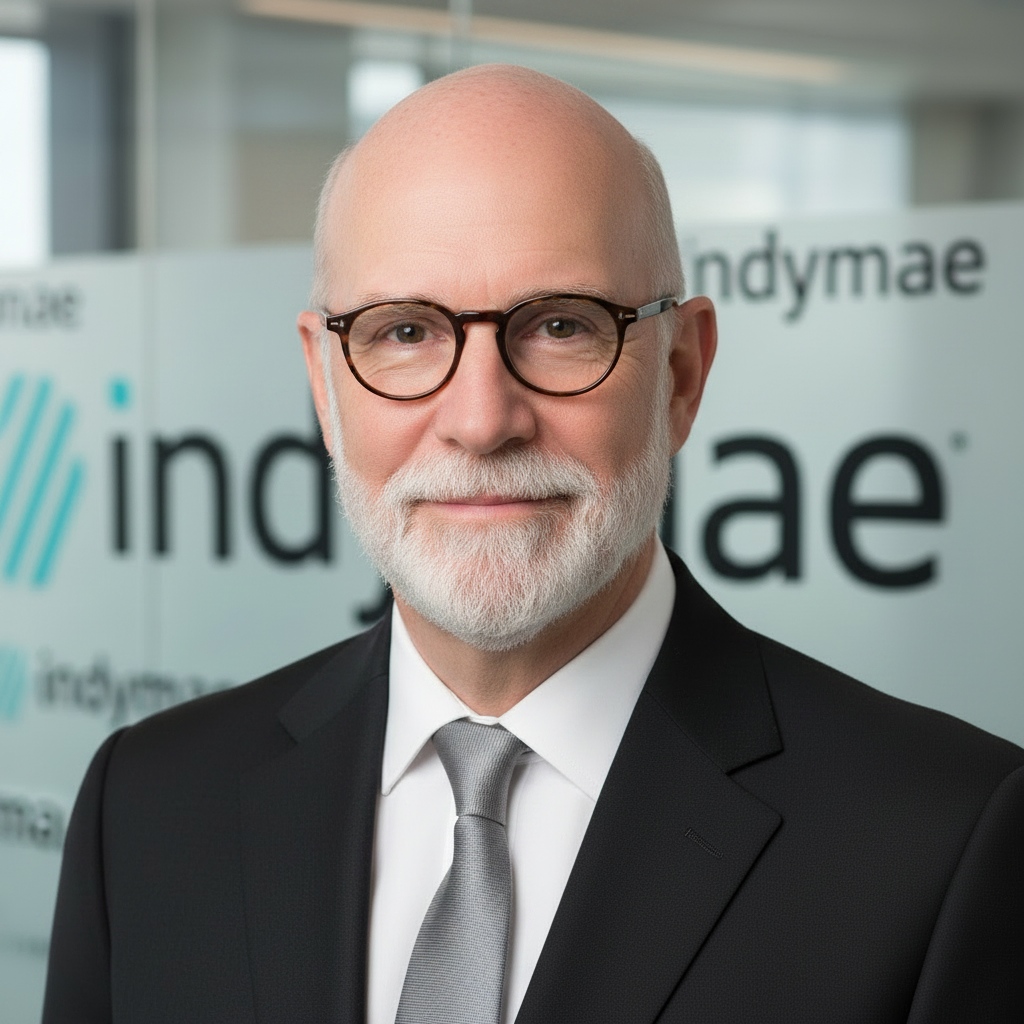
 Bill O'Donnell

Growth Capital vs Equity Financing: Which Is Right for You?
When your business is ready to scale, the financing decision you make can shape everything — from your monthly cash flow to who sits at the decision-making table. Growth capital financing and equity financing are two of the most common paths business owners consider, yet they work in fundamentally different ways. Choosing the wrong one can cost you far more than money.
This guide breaks down both options with real numbers, honest tradeoffs, and practical guidance to help you make the right call for your stage, goals, and risk tolerance.
What Is Growth Capital Financing?
Growth capital is debt-based funding designed to help established businesses accelerate without giving up ownership. Think of it as a structured loan — you borrow a defined amount, repay it over a set term, and keep full control of your company. Learn more about Growth Capital Financing.
How It Works in Practice
A lender like Indymae offers growth capital facilities typically structured as follows:
- Facility size: $1M – $7M
- Term: 12 – 36 months
- Rate: 1.0% – 1.5% per month
- Structures available: term loan, delayed draw, or multi-tranche
- No personal guarantee required
- Qualification basis: Debt Service Coverage Ratio (DSCR)
For example, a $2M growth capital loan at 1.25% per month over 24 months means predictable monthly payments and a clear payoff timeline. Once you repay the facility, the lender relationship ends — no lingering equity stake, no board seats, no profit sharing. To understand how lenders assess repayment capacity, see this DSCR guide for growth loans.
Who Qualifies
Growth capital is well-suited to businesses generating $3M–$50M in annual revenue with consistent year-over-year growth of 2.5% to 5% or more. Lenders focus on cash flow metrics rather than personal credit or collateral, which opens the door for operators who have built real businesses but may not fit traditional bank criteria. For more on options tailored to established companies, read about revenue-based growth financing for mid-market companies.
What Is Equity Financing?
Equity financing means selling a percentage of your company in exchange for capital. Investors — whether angel investors, venture capital firms, or private equity groups — provide funds in return for ownership shares and, often, a voice in how the business is run.
How It Works in Practice
Imagine a software company that raises $3M in a Series A round by selling 20% equity. The founders receive capital with no monthly repayment obligation. However, that investor now owns one-fifth of the company — including a share of future profits and, typically, approval rights over major decisions.
Key characteristics of equity financing:
- No fixed repayment schedule — investors expect returns through growth or an exit event
- Investor return expectations typically range from 10x to 30x over a 5–10 year horizon for venture-backed deals
- Dilution of ownership — every new round dilutes founders further
- Governance involvement — many investors require board representation or veto rights
- Long-term relationship — investors remain stakeholders until a liquidity event such as acquisition or IPO
Who Typically Pursues Equity
Equity financing is most common among early-stage startups with high growth potential but limited revenue, or businesses pursuing transformational growth that exceeds what debt can support. According to the U.S. Small Business Administration, equity financing is particularly prevalent in technology and life sciences sectors where capital needs are large and revenue timelines are long. Established technology and IT services businesses may also explore growth capital options for their industry.
Growth Capital vs Equity Financing: Side-by-Side Comparison
| Factor | Growth Capital | Equity Financing |
|---|---|---|
| **Ownership retained** | 100% | Partial — varies by deal |
| **Repayment required** | Yes, monthly payments | No fixed repayment |
| **Cost of capital** | 1.0%–1.5%/month | 10x–30x investor return expectation |
| **Speed to funding** | 24–48 hours for initial decision | Weeks to months |
| **Control of decisions** | Full founder control | Shared with investors |
| **Personal guarantee** | Not required (with some lenders) | Not applicable |
| **Best for** | Established, cash-flowing businesses | Early-stage or high-burn companies |
The True Cost of Equity
This is where many business owners underestimate the math. Selling 25% of a company today that grows to $20M in value means giving away $5M in future wealth — far more than the cost of a structured debt facility. Growth capital financing carries a defined, calculable cost. Equity carries an open-ended cost that compounds as your company becomes more valuable.
The Federal Reserve's Survey of Small Business Credit consistently shows that business owners who maintain ownership control report higher long-term satisfaction with their financing decisions, even when debt-based options carried higher short-term costs.
When to Choose Growth Capital
Growth capital is likely the better choice when:
- Your business generates consistent revenue and positive cash flow
- You want to fund a specific initiative — expansion, acquisition, working capital, or debt refinancing — with a clear ROI
- Preserving 100% ownership and decision-making authority matters to you
- You need fast access to capital — initial screening decisions in 24–48 hours beat a 6-month fundraising cycle
- You operate in the $3M–$50M revenue range in the US or Canada
- You prefer a defined exit from the financing relationship once repaid
Practical example: A regional distribution company with $8M in annual revenue wants to acquire a smaller competitor for $1.5M. Rather than spend six months pitching investors and diluting ownership, they secure a $1.5M growth capital facility, complete the acquisition, grow revenue by 30%, and repay the facility within 18 months — keeping every dollar of that growth for themselves.
When Equity Financing Makes More Sense
Equity can be the right call when:
- Your business is pre-revenue or early-stage with limited cash flow to service debt
- Growth projections are extremely high and you need a strategic partner, not just capital
- The capital need exceeds what debt markets will support given your current financials
- You are pursuing a venture-scale outcome — IPO, acquisition — where investor networks add strategic value
- You are comfortable with shared governance and long-term investor relationships
Neither option is universally superior. The right choice depends entirely on where your business stands today and where you intend to take it.
Making the Decision: A Practical Framework
Before choosing a path, answer these four questions:
- Does my business generate enough cash flow to service debt payments? If yes, growth capital is worth exploring first.
- How much of my company am I willing to give up? If the answer is none, equity is off the table.
- How quickly do I need capital? Growth capital decisions in 24–48 hours versus months for equity rounds.
- What is the specific use of funds? Defined, ROI-positive uses favor debt. Speculative, long-horizon bets may favor equity.
Ready to Explore Growth Capital?
If your business is generating revenue, growing steadily, and you want capital without giving up ownership, Indymae's Growth Capital Financing is built for you. With facilities from $1M to $7M, flexible structures, no personal guarantee requirement, and an initial screening decision in as little as 24–48 hours, Indymae works with established US and Canadian businesses ready to move fast.
Visit Indymae today to learn more and start your application.


